Monthly Archives: June 2012

… stop down-cutting.

THE BAD NEWS

If you’re gullying, it means you’re cutting down into your own foundation.

THE GOOD NEWS

Gullies don’t down-cut in a uniform fashion all along an entire length at one time. The active erosion occurs at a distinct “nick-point.”

What’s so great about this news is that it means you can find a particular spot and fix it.

The reason its level of destruction can be so complete is that a nick-point migrates up or down the length of its channel, eroding its base as it goes. But you can begin healing by stopping it where it stands today. Now.

Crazy Woman Creek — BEFORE

It’s a super long nick-point.

The most abrupt part of it is the little step on your right.

Please remember The Good News whenever you are approaching a gullying person OR river. It’s easy to forget. Even river professionals will start doing all kinds of other stuff – reshaping the banks, planting deep-rooted woody vegetation on the banks, fencing livestock off the river, protecting the floodplain. Each of these steps is super important. You have heard me speak of them repeatedly! But they won’t stop the gullying. You have to stop the nick-points from down-cutting more of your foundation.

WHAT IS YOUR FOUNDATION?

At first, you might say your base is family, friends, religion, career, nature, or some other big part of your life that you value. But those things are important to you because you’ve decided they are. That’s your worldview. How you think about things underlies how you go about living – it forms the very bed of your life.

FIND A NICK-POINT…

…by looking for whitewater — some palpable disruption of your mind. It’s intense and abrupt. It looks like a cascade, a riffle, or a little waterfall. You might even consider it a pleasant kind of feature if you weren’t a gully because — let’s face it — sometimes intense and abrupt are healthy. There is good whitewater and bad whitewater in rivers, just as there is “clean pain” and “dirty pain” in humans.

Clean pain hurts and is an appropriate response to a real loss (in which case the painful feeling is sadness), danger (creates fear), or injustice (creates anger). But clean pain doesn’t feel yucky. It feels purely like itself. It comes in intense waves of 90 seconds. And when it first strikes – especially in the first 48 hours after a trauma – focus on feeling that feeling rather than trying to stop anything.

Dirty pain feels yucky. Unlike the pure emotional response of clean pain, dirty pain is a function of our foundation – of how we think about things. It is always associated with some story or thought about loss, danger, or injustice. And the yuckiness goes on and on. There may have been clean pain to begin with, but it’s evolved into something destructive because of your thinking. And the problem is that you really are SURE this painful thought is absolutely, always true. Otherwise you wouldn’t believe it, obviously. But no dirty pain is ever associated with truth. Clean pain is. But dirty pain means there’s some underlying assumption or belief that is false.

Please do not take this to mean that you should feel ashamed of experiencing dirty pain. Every single person does it! With practice, we can fall into it less often, notice it sooner, and stop it more easily, but dirty pain is an inevitable by-product of the amazing Body-Mind-Spirit package that makes us humans unique.

You can usually tell the difference between clean and dirty pain, but if you’re not sure:

    • check your reference reach to see if this kind of turbulence happened in this way during your happy times, or
    • tune into your Body Compass. Like with a river, your physical body is an infallible indicator of whether or not what’s going on is healthy.

But if you’re a gully, any whitewater is probably a nick-point so just pick one painful thought about your suffering — preferably the MOST painful thought since stopping the tallest nick-point will put a stop the worst part of the ongoing destruction. Start there.

HOW TO FIX THE NICK POINT

In a river:

The most stable kind of riverbed is rock – the bigger or more solid, the better. A river flowing over bedrock or boulders does not down-cut quickly.

In a human:

Does this mean that the most stable kind of thinking is rigid and heavy?

You can test this theory right now. Think of the strictest dogmas you’ve ever heard of or experienced. Then consider the variety of consequences that came from that firmly held belief. Often there is some joy. Always there is some incredibly dirty pain.

The healthiest thinking feels free. It’s always thirsting for truth, investigating ideas to see what’s true… for now. Since life is always changing, rigid beliefs will eventually be false in some way. I think. Of course that could change!

In a river:

So here it is – finally after a year of blogging and three posts just leading up to this gullying fix — here is how you stop a nick-point. You BUILD A CROSS-VANE:
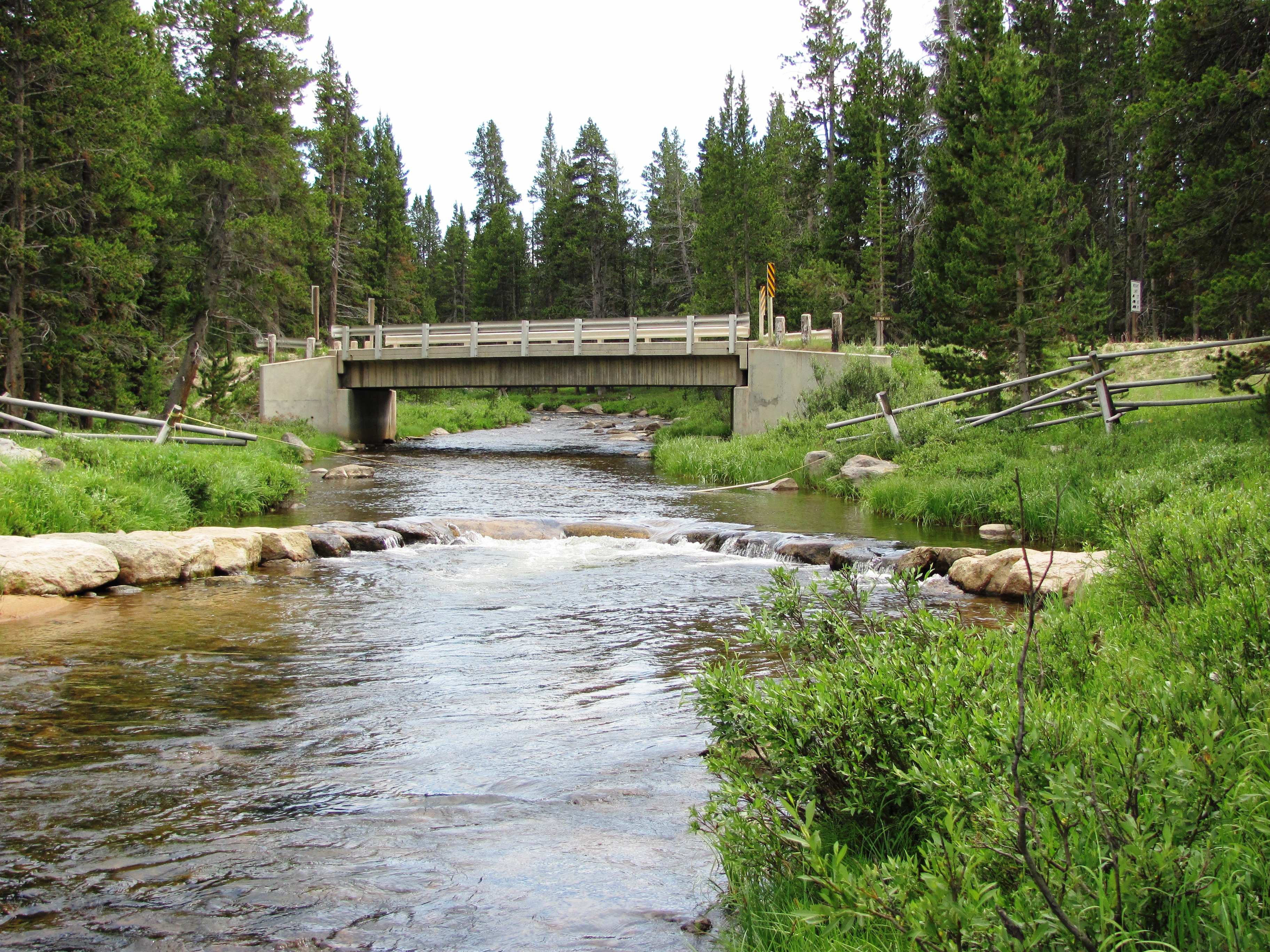
As you can see, to stop a nick-point, we build a rock foundation for the river in that spot. But we can’t just harden the whole river.

Well we could, but then it ends up looking like those “concrete rivers” that run through the middle of many American towns where well-intended but misguided engineers of yore did just that.

We still have to account for the drop in elevation – the disruption – or that energy will just move on downstream and dig up the bed there. So what we do is work with nature’s natural kinds of patterns and create a deep pool that the water can drop into. It generates a lot of turbulence that uses up the energy of the drop. The pool is most people’s favorite part. And there’s so much icing on the cross-vane: it uses natural materials, oxygenates the water, makes lovely habitat for fish and children (and adults!), creates a lovely cascading sound, and is just plain pretty.

In a human:

What’s the human equivalent of a cross-vane? We need something that not only frees up our thinking around the painful belief so we can see if it’s really absolutely true BUT ALSO dissipates all that energy the painful story is carrying —  preferably in an awesomely constructive manner.

The way to free up a painful belief is to ENQUIRE INTO THE THOUGHT WITH AN OPEN MIND:

An especially clear form of such enquiry is presented by Byron Katie. Visit her website for free worksheets.

I hope you will try this kind of thought work at least once because I can’t show you a photo of how it works. Like a cross-vane, thought work not only frees you of pain but somehow transfers the energy of your formerly-rigidly-held thought into a deep pool — of creativity. Releasing the pain feels pleasant, but the creativity afterwards is everyone’s favorite part. Like a cross-vane, thought work uses natural materials –your own sound logic and real experience. It also airs out your overall mind –I call that oxygenation of the highest order. Living like this is the loveliest habitat of all.
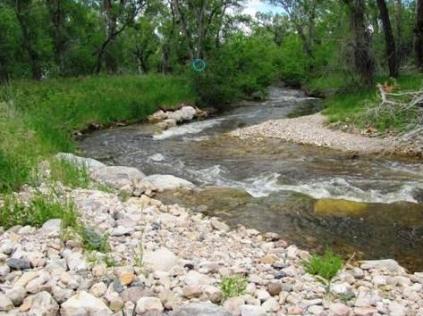
Crazy Woman Creek –AFTER.

The blue circle marks the same place

on each photo so you can get your bearings.

ALWAYS IT TAKES MORE THAN ONCE

Gullies usually have several nick-points, and gullied-out humans usually have a cluster of painful stories. Just grab them one at a time, write them down, ask yourself Byron Katie’s four questions and then think of opposite statements that could be just as true (“turnarounds”). Enjoy the free sensation — and move on to the next painful belief. One day you’ll look around and see you’re no longer down-cutting anywhere but rather flowing happily along creating wonderfulness. That is worth the work.

PS — Afterwards, after you take a few healed breaths, you can revisit The Nifty Algorithm and see if you want to transform your stabilized gully into another type of river altogether. You’ll have the energy to do so when you’re no longer down-cutting.

Healing your gully, Part 2 — The Nifty Algorithm

Today we start looking at the gully-healing process. It’s a detailed, specific, and lengthy description. Just so you know.

I haven’t been able to figure out a way of simplifying it — but at least healing gullies IS doable. The results are not only a relief after the pain of eroding, but they’re lovely.

If you’re wondering whether or not you’re a gully, check yesterday’s post about gully traits and why gullies aren’t always, necessarily, a bad thing.

We begin by gathering information:

  • Find your reference reach.

What did you look like back in a joyful period before the erosion started? Click here for some help.

  • Figure out your pre-erosion Stream Type.

Hold those “Days of Joy” in mind while you take the Stream Personality Quiz, or look at Stream Type descriptions/pictures to see what resonates. You can start by clicking here. If you want to do this step later, you’ll still be able to follow this post.

  • Specifically consider your old floodplain.

Consider what allowed you to spread out and cope with overload in the Days of Joy. That’s the human equivalent of a floodplain. Was it certain friends, pets, family, alone time, access to nature, or maybe city life?

We’ll use your research to decide on one of four restoration options*:

Option I. Return to your original environment and re-connect with your previous safety net by abandoning your current life and either:

  •  re-inhabiting an old version of your life or
  • building a new life on that same playing field.

Option II. Broaden yourself so you can build a healthy life here in your deeper new world — one that is different than your old life but basically still similar in shape and “type.”

Option III. Change your “type” to keep your current location and stabilize by adding only a tiny bit of width but a LOT more interest to your life.

Option IV. Remain a gully, but stabilize yourself so you don’t erode any further.

The Nifty Algorithm!

Question 1 – Is a floodplain still available on your old stomping ground?

Look around there — at where you used to flow in the Days of Joy. See if your old safety valves OR a suitable alternative would be available to you if moved yourself back to that psychic place. Get creative here! Your new space-givers don’t have to be the exact same helpers as before.

  • If your answer is YES, you could pursue Option I.

Example: Sarah descended into herself after her son left for college, expending little effort to meet with the other mothers that she’d known since their kids met in preschool. When she looked back at her Days of Joy — the active phase of mothering — she realized that what had helped her through all the crazy times of motherhood had been not only those other mothers but the feeling of a shared mission. They were all working to nurture the development of young people. “It’s like touching the future,” Sarah mused. “And so often they really need you for something, whereas adults really can and should be more self-sufficient.” Sarah could not go back to the daily life of mothering like some of her friends who still had kids at home. But once she described her floodplain very accurately, it was easy to see similar “ecosystems” where she could build a new but similar channel and reconnect with the world of nurturing youth — working at a school, volunteering with a youth organization, or teaching Sunday School.

  • If your answer is NO, go to Question 2. There’s no point expending the huge effort it takes to go back to your old ecosystem unless you’d have access to the extended network of a floodplain. Without it, you’ll destabilize again the very first time that life hits you with a flood. (And make no mistake, floods are inevitable.) I realize that sometimes there’s just no going back – maybe developers built shopping malls and subdivisions on your old floodplain. But “lower” doesn’t have to mean “worse.” Think of it as “deeper. “Revisit my friend the Colorado River if you want visual proof.

Question 2 – Do you have the ability to broaden your current life significantly AND was your original Stream Type C, D, E, or F (i.e., were you something other than the kind of stream dominated by swift waterfalls, cascades, or rapids)?

You already know your life is narrower than in the Days of Joy, but is it possible to move your walls out and get more lateral breathing room – right here where you are? It takes a lot of effort for sure. And I’m not saying the end result would have to be identical to the one you used to have. It could be qualitatively different — maybe now you’d have lots of exercise time rather than the huge amount of partying you used to do. I just want the new floodplain to be similar to the old one in terms of how much relief it would give you when you’re flowing fast and furious.

  • If your answer is YES to both parts of this question, you could pursue Option II.

Example: Like Sarah, Liz’s gullying started when her son left for college. But when she looked back at her Days of Joy,  she realized that what had helped her through the inevitable floods was the spontaneous silliness and outright unexpected laughter she’d experienced with her son (and his friends) even into their teenage years. “Grown-ups can be so serious.” she told me. “I even — maybe especially — miss the bodily function humor/mishaps!” There was no going back to daily life with her child, so she looked around and considered ways to connect with other children (for an Option I type of restoration like Sarah). But nothing re-created that +10 feeling on her Body Compass. “It’s funny, but I feel like I’m permanently in a sort of deeper level,” Liz commented. “Like I’ll never go back to how I was as a mother OR even before because at this point in my life I value individual moments and just plain fun more than any long-term ambitions I used to have. In a way, I find spontaneous giggles to be deeper and more sacred than anything else.” As soon as she clarified this, Liz started wondering. Always a good sign. She wondered if she could find other sources of surprising belly laughs. She stretched herself a tiny bit and began watching funny movies in the middle of the day… which led her to broadening herself even more and investigating comedy/improv events…  which led her to branching way out and joining her local little theater. Actors, she found, can be very unpredictable. And gross! She’d moved her walls out and created herself a new floodplain, right down at her silly, sacred new level.

  • If your answer to either part of Question 2 is NO, go to Question 3. You can still build a joyful, functional, and stable life for yourself, but you’re going to need a new type of lifestyle. An awesome one.

Question 3 – Do you want to convert yourself to a new kind of life and live like a resilient, highly scenic, rapid-dominated channel? OR were you one of these B-type channels to begin with?

  • If your answer to EITHER part of this question is YES, then you could pursue Option III.

Example: Jim’s best friend died in a car wreck. It was the third funeral he’d been to in two years — all young adults like him. After that, he went into full gully mode. He also moved to a new and completely different kind of community. He doesn’t know any hard-word-hard-play people, he doesn’t want to find them, and in fact he has no interest or ability in “broadening” himself in any way. “I like my focused life, as weird as that may sound,” Jim confided. “My new job is intense. I like it. But I would like to feel like my own foundation is stronger. I know what you mean by that ‘eroding’ feel , and that I don’t like.” Jim is a perfect candidate for an Option 3 Restoration. By stretching himself just a little within an existing passion (in his case, work) he can add challenges. The resulting ride will be fairly thrilling, very beautiful, and incredibly stable.

  • If you need just the bare minimum effort for now, go for Option IV. Most Type A, waterfalling or cascading folks can restore health with a simple patch. And it’s a fine place for anyone to start when they’re not sure how to proceed but need to stop falling apart.

Example: Rachel’s whole family underwent trauma when her daughter was involved in a violent crime. It felt as though their world dissolved under them, and — six months later — it’s still falling away. Quickly. Inexorably. She is exhausted. Going “back” in any way feels out of the question. Her old life, in fact almost the whole world, sounds almost alien to her. Unlike Jim, she sees no passion she wants to develop. Not that she’d have the energy anyway. In Rachel’s case, it’s imperative to find the exact spots where she’s in pain and STOP THE DOWN-CUTTING.

That’s why we’ll start with Option IV as we begin looking at the “nuts and bolts” of repair — although in stream restoration we use “boulders and sod” instead! That’s why it’s so fun AND so pretty. So I’ll see you…

TOMORROW: Healing Gullies, Part 3 – Immediate Stabilization

* This four-option approach, as well as the Rosgen Stream Classification System, were developed by hydrologist Dave Rosgen. Not that he’d advocate using it on people!

Healing your gully — Part 1

“I’m a gully! I don’t want to be a gully! Please advise.”

– You Know Who

Dearest You,

Your request may be the most concise one I’ve received, but it’s not the only one. Gullying seems to be going around. It’s the second most common result in people who have taken the Stream Personality Quiz. I am happy to reassure you all — gullies can be healed.

But first let’s make sure you ARE a gully.

A gully’s most defining trait is isolation. Vertical isolation.

Most gullies began as healthy streams that were stressed in such a way that their only immediate choice was to cut down into themselves. Now they’re flowing down deep — lower than their surroundings — and closely contained by steep walls. Gullies can’t spread out or slow down when life overloads them with a flood. They can’t reach up to their safety valves — their floodplains.

Madagascar, Photograph by Pascal Maitre, National Geographic

Do you feel like you have nowhere to go in a crisis except down inside yourself? Then you indeed may be gullying.

But remember that not all vertical isolation is active gullying.

Don’t confuse the following healthily entrenched rivers with gullies (you can click here to take the Stream Personality Quiz and see what stream you might be):

  • A-types: Waterfalls and Cascades are much steeper and straighter than gullies. They don’t meander around much. If your life’s characterized by abrupt steps alternating with calm pools, you may be an A-type. Tres scenic!
  • F-types: Self-Sufficient streams often are even more vertically isolated — “deeper” —  than gullies, but they’re less steep, they meander more, and they’re proportionately wider. They can be quite stable if they’re fully evolved or have a solid foundation. If your life moves moderately slowly and evenly, you might be an F-type. And quite grand.

Next let’s consider whether or not there’s really anything “wrong” with being a gully. Why do they have such a bad name?

Because gullies are not “stable.”

Wait, wait, wait before you freak out or judge! Let’s look at what we even mean by “stable.” Happily, Natural Channel Hydrology has an objective, technical definition.

A stable stream is one that, over time, transports the flows and sediment of its watershed while maintaining its dimension, pattern, and profile – neither aggrading nor degrading.

A gully’s considered unstable only because it’s adjusting. My grandmother would say it is “shaping.” And she would be very literally accurate. Something happened that was a game changer, and now the stream is changing its width and depth (dimension), where and how much it meanders (pattern), and how fast it flows (profile). The river is finding its own personal, stable form.

But for rivers and people to shape themselves, they must move and rearrange the sediment that has defined their edges and their very foundations. An outside observer will call this “erosion.” All that dirt muddies the water:

Finding oneself creates a mess.

And of course it’s worth it!

So when is gullying a problem?

Gullies are“natural” in that the laws of physics required the stream to adjust in this way after being stressed. But that doesn’t mean we can’t help. I think it’s usually wise to assist a gully in its healing.

BUT. Only you can know if your current gullying is okay with you. The best way to tell is by consulting your Body Compass. Click here for details.

If you, dear You, think you don’t want to be a gully because it’s an ugly word BUT your gut says you’re okay, then you are okay — just as you are. I only hope the Stream Personality Quiz and profile didn’t made you doubt yourself.

But if you feel yucky, then my next post will (finally!) answer your question about ways to begin restoring yourself. It’ll be up tomorrow, I promise. Until then,

All love,

Betsy